

How Much Does It Cost to Repair a Turbocharger in Peru? The Factors That Really Determine the Price
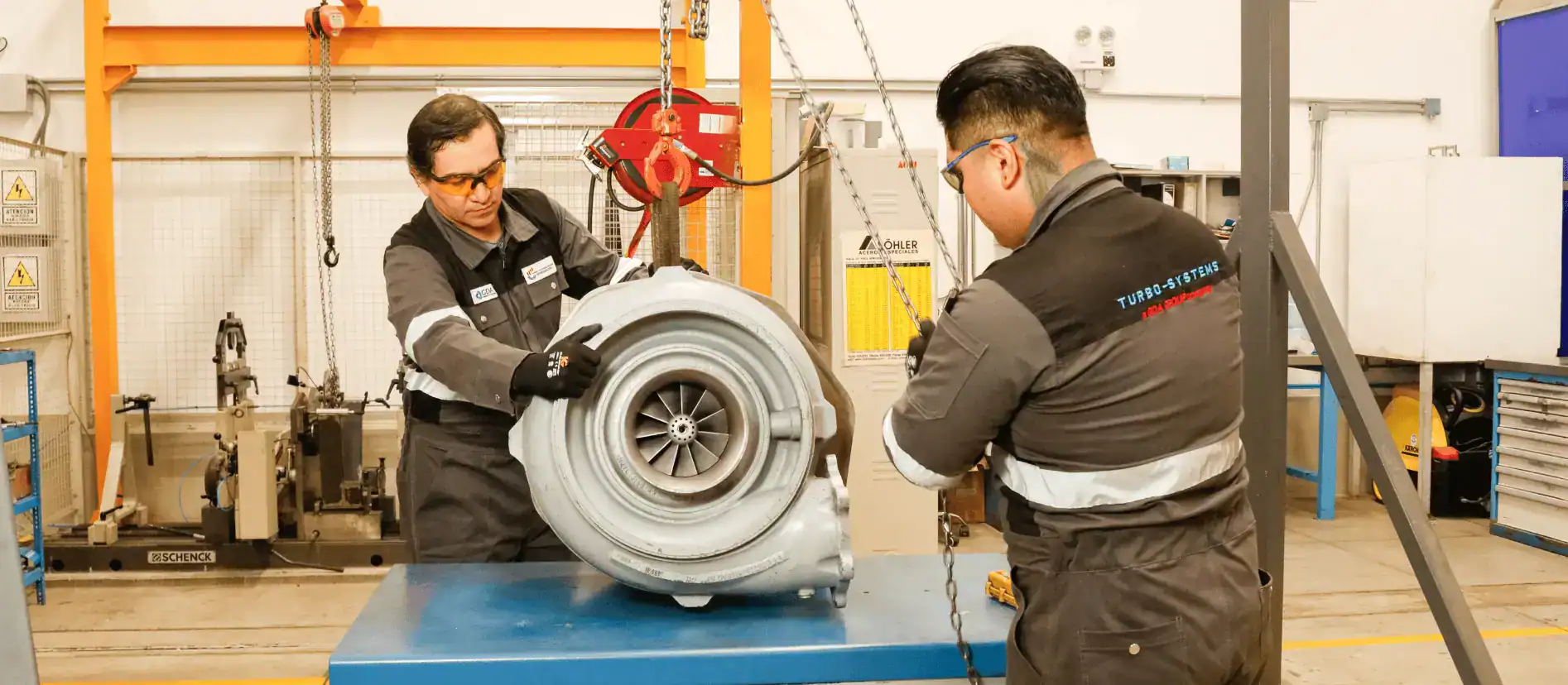
It is one of the first questions any maintenance manager, operations manager or vessel owner asks when a turbocharger starts to fail: how much will the repair cost? The honest answer is that there is no fixed price — but there are specific variables that explain why one quote can be 30-40% higher or lower than another for what appears to be the same job.
At GDA Group we carry out turbocharger repair for industrial, marine and heavy machinery turbochargers at our Lurín workshop, with a diagnosis and technical report before quoting. That way you know what needs repairing and how much it costs before you decide.
In this article we break down those factors so you can read a quote with technical judgment, not just by the final number.
1. Turbocharger brand and model
Not all turbochargers cost the same to maintain. Brands such as ABB/Accelleron, KBB, Napier, MAN, Mitsubishi, IHI, Elliott, General Electric, MTU or PBS have different levels of spare parts availability in the Peruvian market. A high-turnover model (for example, ABB VTR or KBB HPR series) usually has parts in local stock, while less common models may require imports, which makes the process more expensive and longer.
2. Scope of work: standard maintenance vs. major repair
- Standard / preventive maintenance: cleaning, seal replacement, inspection — the lowest cost in the range, with lead times of 2 to 3 days.
- Special repair or major overhaul: replacement of cartridge, rotor, seals and bearings, plus dynamic balancing — mid-range cost, with lead times of 7 to 10 days depending on the diagnosis.
- Blade recovery due to severe damage: requires specialized TIG/MIG welding and machining — an additional service that can nonetheless represent savings of up to 70% compared to replacing the entire part.
3. Original vs. certified equivalent vs. uncertified generic parts
The type of spare part used is probably the variable with the greatest impact on the final price:
- Original factory parts: the highest cost, but with full factory traceability and warranty.
- Certified equivalents: same technical scope at up to 30-40% lower cost than the official brand representative, while maintaining OEM tolerances.
- Uncertified parts: the lowest price on the surface, but the highest risk — they can void the warranty and cause premature failures that end up costing more.
4. Stock availability: the variable that most affects time (and therefore indirect cost)
A stopped turbocharger has a cost that goes far beyond the repair invoice: it represents lost production, propulsion or generation. Here the difference between suppliers is significant:
- Suppliers with permanent stock in Lima of bearings, seals, gaskets and overhaul kits deliver in days.
- Suppliers who import on demand can have lead times of 8 to 12 weeks.
That time difference, multiplied by the cost of stopped equipment, is usually far more relevant than the price difference between quotes.
5. Service location: workshop vs. field, Lima vs. remote areas
Service performed in the supplier's own workshop is usually cheaper than in the field, since it avoids mobilizing equipment and staff. However, for critical operations (vessels that cannot be moved, plants that cannot stop), field service with 24/7 response is essential, and its cost should be weighed against the cost of a plant shutdown.
In remote areas such as the Peruvian Amazon, working with suppliers that have a local technical presence (instead of mobilizing staff from Lima every time) reduces both response time and logistics costs.
6. Technical staff certification
A technical team with direct factory training (for example, ABB certification) correctly interprets service bulletins and works according to OEM manuals with full traceability. This level of specialization has a cost, but it drastically reduces the risk of recurring failures — which is, in practice, the most expensive cost of all: paying twice for the same repair.
7. Warranty offered
A formal 6 to 12 month warranty, backed by a technical report, photographic record and balancing certificate, is an indicator of the supplier's confidence in its own work. Quotes without a written warranty —or with vague warranties— should raise more questions than the price difference.
How to read a turbocharger repair quote
When comparing proposals, check that they clearly include:
- Detailed technical scope (which components are inspected, replaced or repaired)
- Type of spare part to be used (original, certified equivalent or unspecified)
- Committed delivery time
- Formal written warranty, with duration and coverage
- Whether it includes certified dynamic balancing
- Conditions for additional findings during disassembly
Conclusion
The price of repairing a turbocharger in Peru depends on the brand and model, the actual scope of work, the type of spare part, stock availability, the service location and the supplier's certifications. The cheapest quote is not always the most economical in the long run if it involves parts without traceability or long import waiting times.
Need to compare options with technical judgment? Request a detailed quote in 24-48 hours, with clear scope, timeline and terms in writing.
Need a quote to repair your turbocharger? Discover our turbocharger repair and overhaul service or request a technical assessment.
Related reading
Taller propio en Lurín · Técnicos certificados
¿Su turbocompresor necesita un diagnóstico?
Evaluamos su equipo y le entregamos un informe técnico antes de cotizar, para que sepa qué se debe reparar y cuánto cuesta antes de decidir.
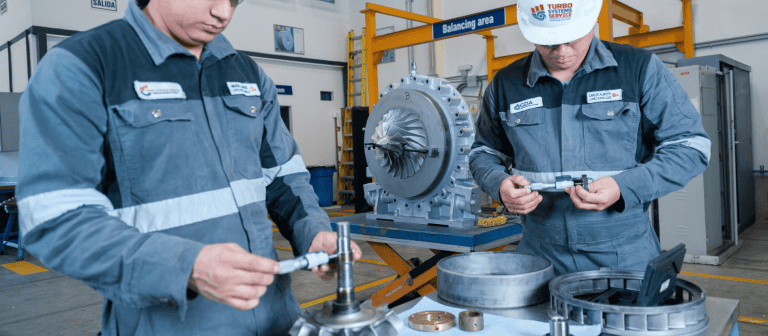 Turbochargers Turbocharger Losing Pressure: 7 Common Causes and How to Diagnose Them in Time
Leer artículo →
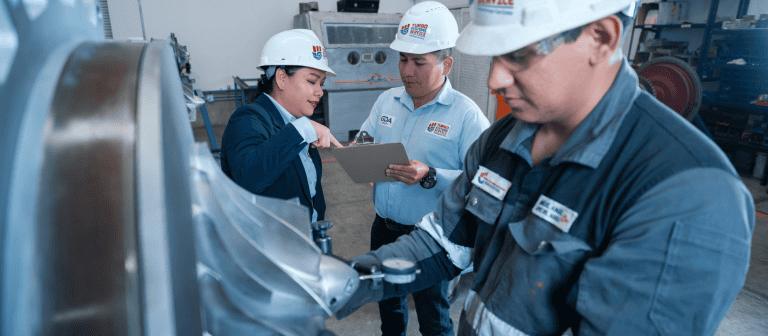 Industrial Engines Engine and Turbocharger Under a Single Contract: Why It Is the Most Efficient Way to Manage Industrial Maintenance
Leer artículo →
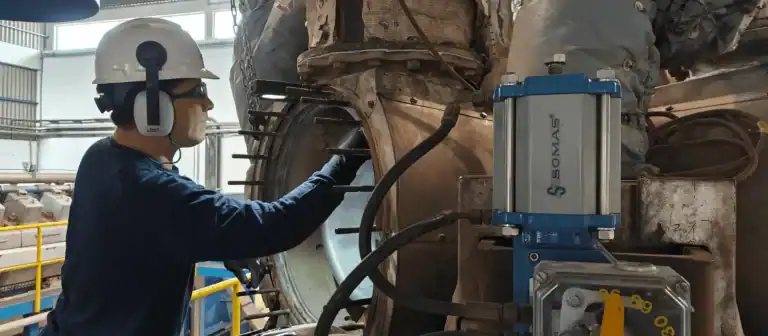 Industrial Engines Industrial Maintenance in the Peruvian Amazon: Why Local Presence Changes the Rules of the Game
Leer artículo →
