

Industrial Turbocharger Maintenance Guide: What to Check, What It Includes and How Long It Takes
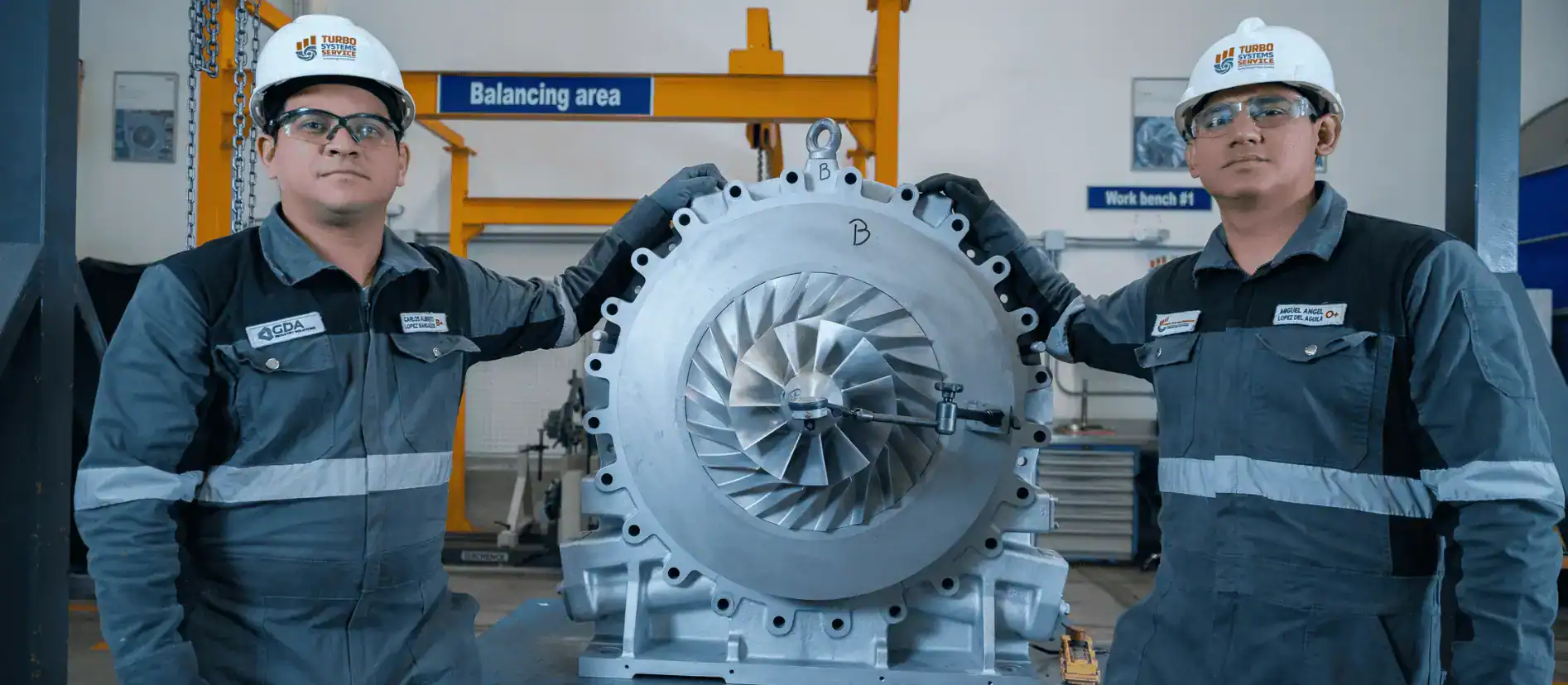
A stopped turbocharger is not just a broken part: it is a machine at a standstill, a vessel without 100% propulsion or a plant generating below capacity. In Peru, where sectors such as marine and fishing, power generation, oil and gas, mining and defense depend on critical rotating equipment, having reliable turbocharger maintenance is no longer just a technical matter and becomes a decision about operational continuity.
If you have already identified a problem with your equipment and need to service it, discover our turbocharger maintenance and repair service for ABB, MAN and MTU brands.
In this guide we explain what a truly complete turbocharger maintenance service includes, which brands are serviced in the Peruvian market, which warning signs you should not ignore and what to ask before hiring a supplier.
What is turbocharger maintenance and why is it critical?
The turbocharger is the component that forces air (or reused exhaust gases) into the combustion chamber of a diesel or gas engine, increasing its efficiency and power. When a turbocharger loses performance, the entire engine is affected: power drops, fuel consumption rises and wear on other components increases.
Maintenance is divided into two main areas:
- Preventive maintenance: scheduled inspections, vibration analysis, replacement of seals and bearings before they fail.
- Corrective maintenance (overhaul): complete disassembly, dimensional inspection, replacement of bearings, rotors and cartridges, dynamic balancing and functional testing after a failure or a detected drop in performance.
Turbocharger brands serviced in Peru
Not all workshops have the same brand coverage. A specialized supplier in the Peruvian market should be able to work, at a minimum, with:
- ABB / Accelleron (VTR, TPL, RR, A100 series)
- KBB (R, HPR, M40, ST series)
- Napier (NA-5, NA-7, NA-8, NT1)
- MAN (NA, NR, TCA, TCR series)
- Mitsubishi (MET, SR, SRC, TD10, TD13)
- IHI (RU, RH)
- Elliott (H, BCO series)
- General Electric (7513-7517)
- MTU (ZR, AGL)
- PBS (PTR, TCP)
This breadth of brands is key because equipment from different manufacturers can coexist in the same port or plant, and changing suppliers for each brand raises costs and lead times.
Signs that your turbocharger needs maintenance
- Noticeable loss of engine power
- Increased fuel consumption with no apparent explanation
- Black or bluish exhaust smoke
- Metallic noises, whistling or abnormal vibrations
- Boost pressure below expected levels
- Oil leaks from the turbo housing
If you detect two or more of these signs, it is advisable to schedule a borescope inspection and a vibration analysis before the failure worsens and makes the repair more expensive.
What should a complete overhaul service include?
A well-executed turbocharger overhaul is not just “opening and closing” the equipment. It should include:
- Disassembly and ultrasonic cleaning of the rotor cartridge
- Dimensional inspection according to OEM tolerances
- Replacement of bearings, labyrinth seals, wear rings and gaskets
- Dynamic balancing with precision equipment (ideally German Schenck technology, with 0.1 g-mm resolution)
- Post-repair functional testing
- Technical report with photographic record and balancing certificate
- Formal warranty, typically 6 to 12 months
Repair time: what to expect
In the Peruvian market, repair times vary according to complexity:
- Standard maintenance: 2 to 10 days
- Special repairs or repairs with blade recovery: 7 to 10 days, depending on the diagnosis
One factor that directly impacts the timeline is spare parts availability: while some suppliers import on demand (with lead times of 8 to 12 weeks), others keep permanent stock of bearings, seals and overhaul kits in Lima, which drastically reduces downtime.
Original vs. certified equivalent parts
One of the most important points when contracting a service is understanding which spare parts are being used. Original or certified equivalent parts guarantee full traceability and compliance with OEM tolerances. Using uncertified parts, although cheaper in the short term, can lead to premature failures and loss of warranty.
Blade recovery: an alternative that saves up to 70%
When the turbine or compressor blades show wear but no serious structural failure, there is an alternative to full replacement: recovery through specialized TIG/MIG welding, machining and polishing of aerodynamic profiles, verified with liquid penetrant inspection (PT). This process can reduce the cost by up to 70% compared to buying a new part, without sacrificing equipment performance.
Key questions before hiring a turbocharger maintenance service
- Which specific brands and models do they handle (not just “turbochargers” in general)?
- Do they have local spare parts stock, or is everything imported on demand?
- Do they offer 24/7 emergency response?
- What formal warranty do they provide and what does it cover?
- Do the technical staff have factory certification (for example, direct ABB training)?
- Do they have their own dynamic balancing equipment, or do they subcontract that process?
Conclusion
Turbocharger maintenance in Peru requires more than technical goodwill: it requires multi-brand coverage, spare parts stock, precision balancing technology and 24/7 response capability in sectors where every hour of downtime has a real cost. Evaluating your supplier with the questions in this guide will help you make an informed decision and avoid surprises when you need your equipment most.
Is your turbocharger showing power loss or abnormal noises? Request a no-obligation technical assessment and receive a detailed quote in 24-48 hours.
Related reading
Taller propio en Lurín · Técnicos certificados
¿Su turbocompresor necesita un diagnóstico?
Evaluamos su equipo y le entregamos un informe técnico antes de cotizar, para que sepa qué se debe reparar y cuánto cuesta antes de decidir.
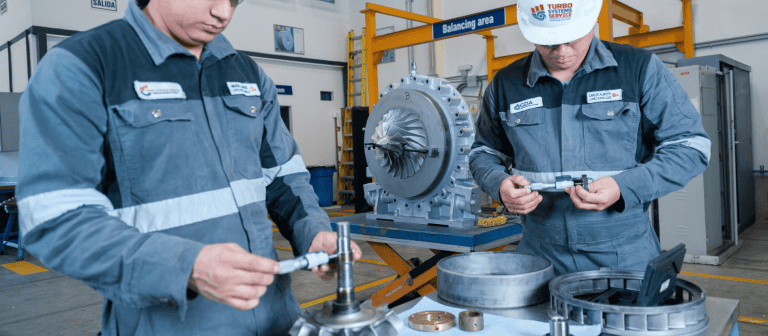 Turbochargers Turbocharger Losing Pressure: 7 Common Causes and How to Diagnose Them in Time
Leer artículo →
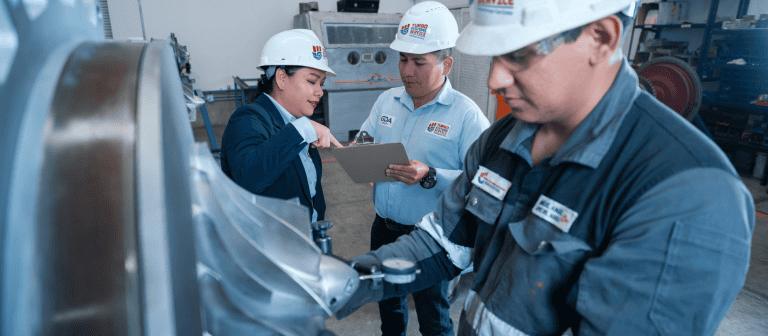 Industrial Engines Engine and Turbocharger Under a Single Contract: Why It Is the Most Efficient Way to Manage Industrial Maintenance
Leer artículo →
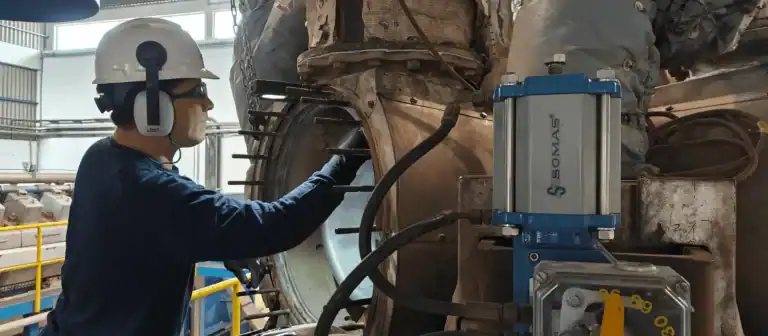 Industrial Engines Industrial Maintenance in the Peruvian Amazon: Why Local Presence Changes the Rules of the Game
Leer artículo →
